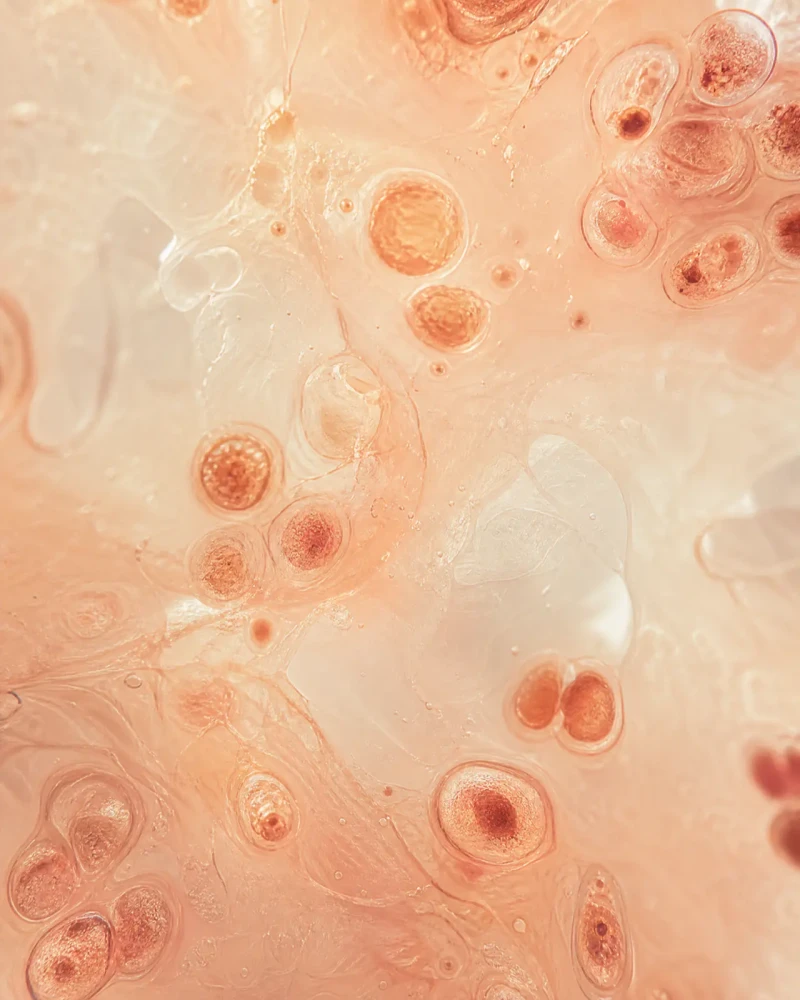
Although it may sound like something out of a science fiction film, “zombie cells” is an analogy used to describe one of the more intriguing topics in the biology of aging. Known scientifically as senescent cells, they are cells that have stopped dividing but have not died and continue to affect their surroundings.
In this article we look at what cellular aging (senescence) is, how it may affect the skin, and the limits of what is known today.
What Is Cellular Aging (Senescence)?
Most cells in our body can divide only a limited number of times. When a cell has divided many times, when its DNA is damaged, or when it is exposed to intense stress, it sometimes stops dividing altogether. This state is called cellular aging, or senescence. One of the determinants of this division limit is structures called telomeres, found at the ends of chromosomes, which shorten each time the cell divides.
Senescence is in fact a protective mechanism of the body. It prevents a damaged cell from multiplying uncontrollably and plays a temporarily useful role in some processes such as wound healing. The problem arises when these cells accumulate over time.
Why “Zombie” Cells?
Normally, cells that lose their function are removed in a programmed way and cleared by the immune system. Senescent cells, however, can resist these processes. They do not divide, but they do not die either; they stay in the tissue and remain metabolically active.
As we age, the immune system’s capacity to clear these cells also declines, so senescent cells accumulate more and more in tissues. It is this “not dying but not doing their real job” state that has led to the zombie cell analogy.
SASP: How Zombie Cells Affect Their Neighbors
What makes senescent cells important is not just that they have stopped dividing. These cells release various signaling molecules into their surroundings. In the scientific world, this secretion profile is called SASP (senescence-associated secretory phenotype).
SASP can include signaling molecules that increase inflammation and enzymes that break down the extracellular matrix. These secretions can also negatively affect neighboring healthy cells and may contribute to a low-grade, chronic inflammatory environment in the tissue. This silent, aging-related inflammation is also referred to in the literature as inflammaging.
Skin and Senescent Cells
Skin is one of the organs most exposed to external factors. For this reason, the accumulation of senescent cells in the skin can increase with both age and environmental factors. Research indicates that senescent cells are found in greater numbers in aged and sun-damaged skin.
In senescent fibroblasts, collagen production declines, and the enzymes secreted through SASP may contribute to the breakdown of existing collagen and elastin fibers. This process is associated with thinning of the skin, loss of elasticity, and more visible wrinkles.
Factors That Can Speed Up Senescence
- Ultraviolet rays: One of the main external factors that can trigger senescence in the skin through DNA damage and oxidative stress.
- Smoking: The harmful substances it contains increase oxidative stress.
- Air pollution: It can increase the oxidative load on the skin.
- High sugar consumption: It can contribute to glycation processes that damage the structure of proteins.
- Chronological age: Cellular damage that accumulates over time and a declining clearance capacity contribute to a growing burden of senescent cells.
- Chronic stress and poor sleep: They can negatively affect the body’s repair and renewal processes.
Why Does Lifestyle Matter?
Completely stopping the accumulation of senescent cells is not possible today. However, reducing the factors that speed up this accumulation has a meaningful place in protecting skin health. Regular sun protection, staying away from cigarettes, a balanced diet rich in vegetables and fruit, regular physical activity, and good-quality sleep are the basic steps in this respect.
Dr. Fulya Koç’s approach, which treats the skin as part of the body and lifestyle, is based on this knowledge as well: evaluating the skin not only from the outside but together with all the processes that affect it.
Senolytics: A Promising but Still Early Field
In recent years, intensive research has been carried out on molecules that aim to selectively eliminate senescent cells or reduce the effects of SASP. These approaches, called “senolytic” and “senomorphic,” have produced striking results, particularly in animal studies.
However, this field is still at the research stage. There is no senolytic treatment in routine use whose effectiveness and long-term safety have been proven in humans, particularly for skin aging. For this reason, one should be cautious about products or treatments claimed to “clear zombie cells.”
Do Medical Treatments Affect Senescent Cells?
The aim of the medical treatments used for skin aging today is not to eliminate senescent cells but to support the skin’s moisture balance, tissue quality, and own renewal processes. Although the effects of some methods at the cellular level continue to be studied, there is not enough scientific evidence to say that any aesthetic treatment “clears” senescent cells.
For this reason, in Dr. Fulya Koç’s approach, medical treatments are considered not in place of lifestyle changes but alongside them, with realistic expectations. Sun protection and healthy habits remain the steps with the strongest evidence in this area.
Following the Science, Staying Realistic
Understanding cellular aging is a reminder that aging is not a process that happens only on the surface. Reviewing your skin’s current condition and the lifestyle factors that affect it together in an examination may be the first step toward a personalized, science-based, and realistic age management plan.

Nuclear Medicine Specialist, Medical aesthetics, anti-aging, hair and skin health. About
This article is for general information and does not replace medical advice. Please consult your doctor about the right approach for you.