What Is Exosome Therapy?
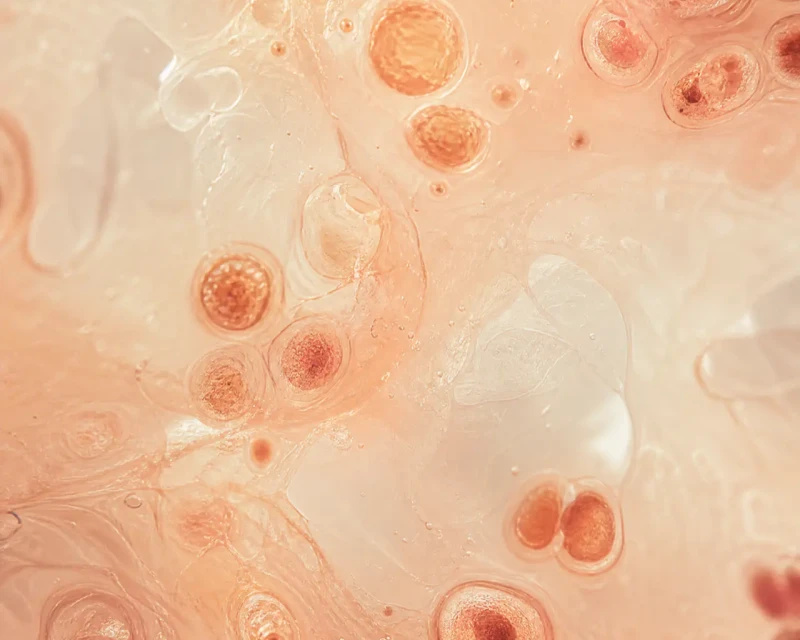
Exosomes are very small vesicles released by cells, containing proteins, lipids and molecules that carry genetic messages. They act as a kind of communication tool between cells. Exosome products used for aesthetic purposes can be obtained in the laboratory from stem cell cultures or from plant sources.
The aim of exosome therapy is to support the skin’s repair and renewal processes at the level of signaling. It is used in areas such as skin quality, evenness of tone and recovery after procedures.
An important note: Exosome treatments are a relatively new field. Although early studies are promising, the scientific evidence is still developing; standardization between products is limited and long-term data are not yet sufficient.
There are products on the market that come from different sources and whose contents differ considerably from one another. For this reason, product selection, transparency about ingredients and reliable supply are points that need particular attention in this field.
Who Is It Suitable For?
- Those looking for general freshness and renewal support for skin quality
- Skin that looks dull and tired and has an uneven tone
- Those who want to support recovery after procedures such as microneedling or laser
- Those with superficial post-acne texture irregularities
- Those who want to consider newer methods knowing their scientific status, with realistic expectations
Exosome therapy is not an option on its own for marked sagging, deep wrinkles or volume loss.
How Is the Treatment Done?
- At the consultation, your skin type and expectations are assessed, and whether exosome therapy is suitable for you is discussed.
- The skin is cleansed and numbing cream is applied for comfort.
- The exosome product is applied to the skin mostly through micro-channels created with microneedling (dermapen) or a similar method.
- At the end of the procedure the skin is soothed, and care recommendations for the first few days are explained.
Including the time needed for the numbing cream to take effect, the procedure usually takes 45–60 minutes. Session intervals are determined according to the accompanying procedure.
What to Pay Attention to Afterward
- It is advisable not to wear makeup for the first 24 hours and to cleanse your skin only with the recommended products.
- For a few days, take care to protect yourself from the sun and use a broad-spectrum sunscreen.
- Pause saunas, steam baths, swimming pools and intense exercise for a few days.
- Pause products containing acids, peels and retinoids for as long as your physician recommends.
- Your skin may feel dry and tight for a few days; regular use of the recommended moisturizer will be soothing.
Possible Side Effects and Who Should Not Have It
Side effects are mostly related to the accompanying microneedling procedure: redness, tenderness, mild swelling and dryness go away within a few days. Rarely, an allergic reaction to the product or an infection may develop. Because the content and quality of products can vary, it is important to use a product obtained from a reliable source.
It is not performed during pregnancy and breastfeeding, if there is an active infection, cold sore or inflamed acne in the treatment area, during active cancer treatment, or in cases of known allergy to the ingredients.
Prolonged redness, crusting, increasing pain or discharge are not a normal course; if these occur, you should contact your physician.
Dr. Fulya Koç’s Approach
When evaluating new methods, Dr. Fulya Koç puts transparency first. If exosome therapy is to be recommended, it is openly discussed that this is a developing field, that expectations should be kept realistic and that results vary from person to person.
At the Ataşehir clinic, exosome therapy is considered not as a solution on its own but as part of a holistic plan that supports the skin’s own renewal capacity.
As the scientific data develop, recommendations in this area are updated as well; the priority is that the information you are given is current and balanced.
Fulya Koç
Frequently asked questions
No. Exosomes are not cells; they are small vesicles released by cells. Although some products are obtained from stem cell cultures, no living cells are transferred in the treatment.
Laboratory and early clinical studies on exosomes have shown promising results; however, large-scale and long-term studies are still limited. For this reason, it is important to know that the scientific evidence is still developing and to shape expectations accordingly.
Exosome products are mostly applied to the skin after procedures such as microneedling (dermapen) or laser. Which method it will be planned with is determined according to your skin type.
The information on this page is general. Whether the treatment suits you, its possible risks and the results you can expect are assessed individually at your consultation. Results vary from person to person. Image is illustrative.