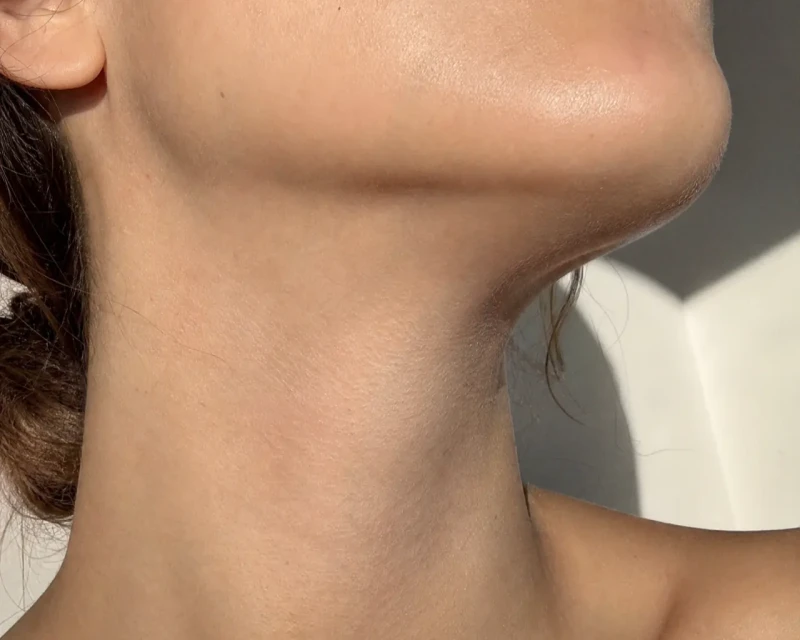

What Is a French Thread Lift?
The French thread lift is a facial lifting technique, known by this name, that uses threads the body gradually absorbs and that have small cone-shaped anchoring structures. The cones grip the tissue and help support a sagging cheek and jawline upward.
The absorbable material in the threads stimulates collagen production in the surrounding tissue for as long as they remain under the skin. In this way, a French thread lift aims for both mechanical support and an effect that strengthens the skin’s own structure.
Its main difference from a classic thread lift lies in how the threads anchor and in the placement technique. Which thread system suits you better is determined by your facial structure and the direction of sagging.
Who Is It Suitable For?
- People with mild or moderate sagging in the mid-face and cheeks
- Those who notice fullness toward the corners of the mouth and a less defined jawline
- People who want to refine the facial contour and are not considering surgery
- Those whose skin thickness and elasticity are adequate to hold a thread
When there is marked excess skin and advanced sagging, the effect of a French thread lift may be limited.
Skin quality and the degree of sagging matter more than age. Smoking, sudden weight changes and heavy sun damage can reduce the effect and duration of threads, so lifestyle habits are also evaluated at the consultation.
How Is the Procedure Done?
- The face is analyzed at the consultation, and the number and placement lines of the threads are determined.
- The skin is cleansed and the entry points are marked.
- Local anesthesia is applied at the entry points.
- The threads are advanced under the skin along the planned line with a fine needle.
- The tissue is gently repositioned, symmetry is checked and the ends of the threads are trimmed.
At the end of the procedure, you may feel a slight pulling and tightness in the face. As the tissue settles, the small irregularities seen in the first days usually soften on their own. You can return to daily life the same day; however, it is helpful not to plan a busy social schedule for the first few days.
What Should You Pay Attention to Afterward?
- For the first 1–2 weeks, avoid opening your mouth wide, intense facial expressions and facial massage.
- For the first nights, sleep on your back if possible.
- Stay away from heavy exercise, saunas and steam baths for a few days.
- Start using makeup and skin care products after the period your doctor recommends.
The healing process is evaluated at the follow-up visit. If you notice signs such as steadily increasing pain, spreading redness, fever or discharge at the entry points, you should reach your doctor without delay.
Possible Side Effects and Who Should Not Have It
Swelling, bruising, tenderness and a feeling of tightness are the most common effects. Temporary dimpling of the skin, mild asymmetry and a pulling sensation when speaking or smiling may occur. Rarely, infection, displacement of a thread or a thread becoming palpable may be seen.
The procedure is not performed during pregnancy and breastfeeding, in people with an active infection or skin condition in the treatment area, in people with bleeding disorders, or in some chronic conditions that are not under control. The medications you use, especially blood thinners, should be shared at the consultation.
Dr. Fulya Koç’s Approach
With a French thread lift, Dr. Fulya Koç avoids pulling the tissue more than necessary; the goal is for the face to look rested and refined while the expression is kept as it is.
Before the procedure, the change a thread can realistically offer you is explained. In some cases it may be more appropriate to start with a method that supports skin quality instead of a thread, or to wait for a while; this decision is made together.
In suitable people, a French thread lift can be planned together with filler or procedures that support skin quality; however, adding each method to the plan should be based on a real need.
Fulya Koç
Frequently asked questions
Both methods use dissolvable threads. The difference lies in the structure that anchors the threads to the tissue and in the placement technique; the French thread lift uses cone-shaped anchoring structures. Which one is suitable is determined by your facial structure.
The threads are absorbed over time. The duration of the effect varies with skin structure, age and lifestyle; it is generally reported as a little over 1 year. The result is not permanent.
Because the threads are placed through needle entry points, stitch marks usually do not occur. Small redness or scabbing may be seen at the entry points for a few days.
The information on this page is general. Whether the treatment suits you, its possible risks and the results you can expect are assessed individually at your consultation. Results vary from person to person. Image is illustrative.