
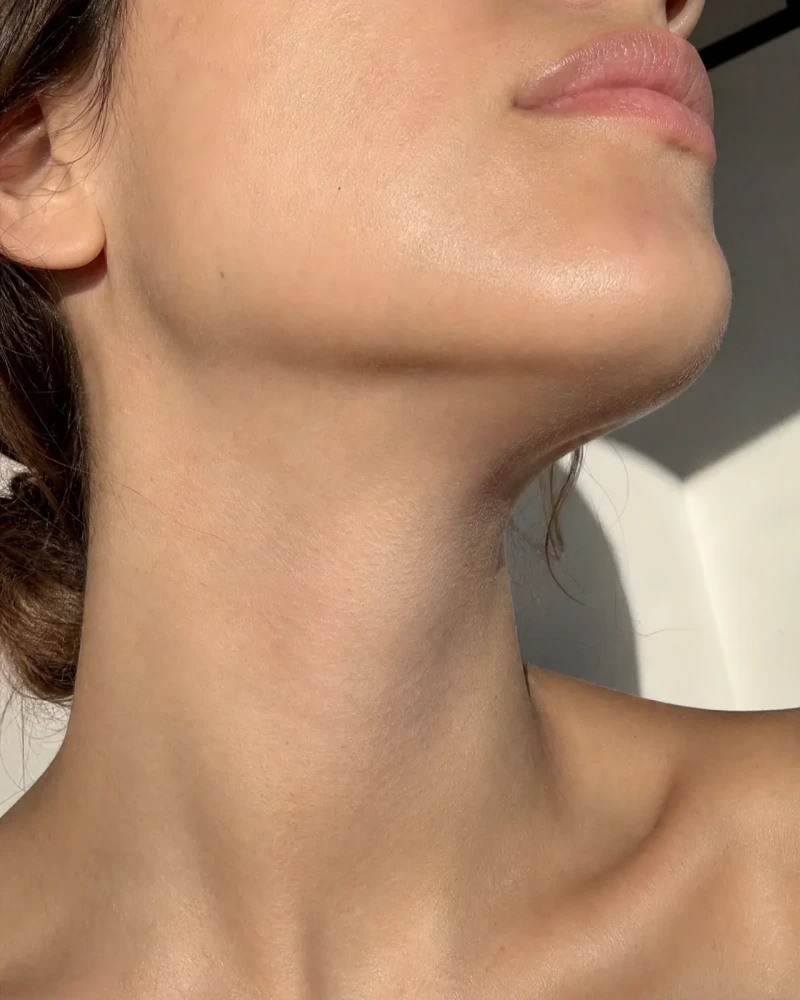
What Is HIFU?
HIFU stands for High Intensity Focused Ultrasound. In this method, ultrasound energy is focused on specific points in the deep layers without harming the skin surface, creating small points of heat there.
The heat targets the muscle-connective tissue layer (SMAS), which is also addressed in a surgical facelift, and the deep dermis. In response to this controlled effect, the body’s repair process forms new collagen over time; this gradual tightening is what HIFU skin tightening aims for.
The procedure does not require an incision or needle entry into the skin. The depth the energy reaches is adjusted according to the transducer used and chosen based on the anatomy of the area.
Who Is It Suitable For?
- People with mild laxity in the facial contour, jawline and under the chin
- Those who notice mild drooping in the brow area
- People with early skin laxity on the neck
- People who prefer to avoid needle-based procedures or who want support alongside them
In advanced sagging and very thin skin, the effect of HIFU is limited; results can differ markedly from person to person.
HIFU does not give the same result as methods such as filler or threads; it is a separate option that targets tightening in the deep tissue. When laxity is still at an early stage, it can also be considered as part of an age management plan.
How Is the Procedure Done?
- At the consultation, skin thickness and the distribution of laxity are evaluated, and the treatment areas are determined.
- The skin is cleansed and all makeup is removed.
- Gel is applied to the area to conduct the ultrasound.
- The transducer is placed in contact with the skin, and pulses set to different depths are delivered along planned lines.
- At the end of the procedure, the gel is cleaned off and sunscreen is applied.
The duration of the procedure varies with the size of the area treated. A feeling of warmth and pricking becomes more noticeable at moments when the energy reaches the deeper layers and passes when the pulse ends. Measures to improve comfort are planned before the procedure.
What Should You Pay Attention to Afterward?
- For a few days, avoid direct sun exposure and use sunscreen.
- As long as tenderness continues, pause peels and irritating products.
- Stay away from saunas and very hot environments in the first days.
- Knowing that the result develops gradually, avoid judging it too early.
Once tenderness has passed, you can return to your daily skin care routine. Regular sun protection, enough sleep and avoiding smoking are habits that support new collagen formation and may help maintain the result.
Possible Side Effects and Who Should Not Have It
During the procedure, a feeling of warmth, pricking or aching may occur; sensitivity varies from person to person. Afterward, temporary redness, mild swelling and tenderness to touch may be seen. Rarely, unwanted effects such as small bruises, temporary numbness or a superficial burn may develop.
During pregnancy, when there is an open wound, active infection or widespread active acne in the treatment area, when there is a metal implant in the area, and in people who carry an electronic device such as a pacemaker, a doctor’s evaluation is essential before the procedure; HIFU is not performed in some of these situations.
Dr. Fulya Koç’s Approach
Dr. Fulya Koç regards HIFU as one of the methods that support the skin in producing its own collagen. At her clinic in Ataşehir, before the procedure she shares realistically how much HIFU may contribute depending on the degree of sagging.
When considered appropriate, HIFU is included in a long-term age management plan together with skin care, sun protection and, if needed, other supportive methods.
Results vary from person to person; for this reason, the change is evaluated together at a follow-up visit a few months after the procedure.
Fulya Koç
Frequently asked questions
A mild feeling of tightness may appear right after the procedure; however, the main change develops gradually as new collagen forms and usually becomes more noticeable within 2–3 months.
For most people, one session a year is considered sufficient. The interval between repeats is determined by the doctor according to skin structure, age and the result achieved.
When the procedure is performed with appropriate depth and dose settings, the aim is to target the connective tissue layers, not the fat tissue. In people with a slim face, the choice of depth is especially important and planning is done accordingly.
In suitable cases, the two methods can be used together by planning them at different times. The order and the interval are determined individually after the consultation.
The information on this page is general. Whether the treatment suits you, its possible risks and the results you can expect are assessed individually at your consultation. Results vary from person to person. Image is illustrative.